How to Pursue NMC Recognised General Surgery in the UK

General surgery in the United Kingdom means completing postgraduate surgical training at NHS hospitals in the United Kingdom — through pathways like Core Surgical Training (CST), MRCS and FRCS examinations, and specialist registration with the General Medical Council (GMC). Indian MBBS graduates can join these programmes through PLAB (now called UKMLA), the GMC Sponsorship route, or through equivalence-based routes like CESR. NMC India recognises UK PG surgical degrees — so if you complete your surgical training from the UK, you can practice as a specialist surgeon in India without clearing FMGE or the upcoming NExT exam. General Surgery in the UK is a preferred specialty for Indian MBBS.

Every year, India produces over 90,000 MBBS graduates from more than 820 medical colleges (source: NMC India, 2025-26 data). But the number of PG seats available through NEET PG is only around 52,000 to 53,000 — and that includes government, private, and deemed university seats combined. For foreign medical graduates who completed MBBS from countries like Russia, China, or Ukraine, the FMGE exam has a pass rate of only about 29% in recent sessions (source: NBE, December 2024 session). The reality is harsh: tens of thousands of qualified Indian doctors cannot get the surgical training they want in India. If you are one of them — if you want to pursue general surgery but could not get a seat through NEET PG, or if you failed FMGE and feel stuck — general surgery in the UK is not a backup plan. It is a real, structured, NMC-recognised pathway. Career Voyage has helped many Indian MBBS doctors in this exact situation find a way forward. If you want to explore your options, see our page on options after FMGE failed.

If you want to know whether you are eligible for general surgery training in the UK, get in touch with Career Voyage. Our team will review your profile and tell you exactly which pathway — PLAB, UKMLA, GMC sponsorship, CESR, or MRCS — fits your qualifications and experience. Call us or send a WhatsApp message for a free consultation.

For many Indian medical graduates, pursuing NMC recognised general surgery abroad is an important step toward building a world-class surgical career. One of the most preferred destinations is general surgery in the United Kingdom, where training programmes are well structured, internationally respected, and aligned with regulatory standards recognised by the National Medical Commission (NMC). Indian doctors exploring general surgery abroad for Indian medical graduates benefit from the UK’s clearly defined surgical pathways, including Core Surgical Training and higher specialty routes, along with essential examinations such as PLAB, MRCS, and FRCS. Understanding eligibility requirements and following NMC guidelines for general surgery abroad allows candidates to plan their career journey strategically while ensuring their qualifications remain relevant both in the UK and in India.

For Indian MBBS graduates, the biggest questions are often practical ones: Is PLAB mandatory for surgery in the UK? Can I enter surgical training directly? Are there alternatives for experienced surgeons? And how does UK surgical training align with long-term recognition in India?

This guide answers these questions honestly, covering the UK general surgery training pathway, MRCS and FRCS examinations, NHS job opportunities, surgery in the UK without PLAB, and how these routes relate to NMC recognised surgery abroad.pathways, see our page on Clinical MD/MS in the UK.

For more details on clinical training pathways, see our page on Clinical MD/MS in the UK.

Pursue General Surgery in the United Kingdom

Why Choose General Surgery Abroad After MBBS in India?

Choosing to pursue general surgery abroad after MBBS in India offers exposure to a wider range of clinical cases, modern surgical techniques, and structured training environments. Opting for an NMC recognised general surgery abroad programme — particularly in the United Kingdom — ensures that your training is not only internationally respected but also aligned with Indian regulatory expectations.

The UK healthcare system provides extensive hands-on experience under the supervision of senior consultants, allowing trainees to develop strong operative skills, clinical judgement, and professional confidence. Access to advanced surgical technologies, multidisciplinary team-based care, and evidence-based practice further prepares surgeons to meet global healthcare standards.

For Indian doctors, pursuing general surgery in the UK also offers a transparent career pathway, globally recognised qualifications, and long-term career flexibility — whether the goal is to continue working within the NHS or return to India with internationally valued surgical training.

Compared to highly competitive domestic pathways, international surgical training offers a structured and merit-based progression system that many Indian doctors find more predictable and career-oriented.

Compared to highly competitive domestic pathways, international surgical training offers a structured and merit-based progression system that many Indian doctors find more predictable and career-oriented.

General Surgery in the UK: Why This Path Works for Indian Doctors After MBBS

For thousands of Indian MBBS graduates, pursuing general surgery in the UK represents more than just career advancement—it represents access to a healthcare system that values structured training, transparent progression, and internationally portable qualifications. Unlike the highly saturated domestic medical landscape in India, where securing a surgical seat through the National Board of Examination often involves fierce competition and years of waiting, the UK offers a merit-based alternative with clear entry points and defined timelines.

What makes general surgery training in the UK after MBBS in India particularly attractive is that the journey doesn’t require candidates to compromise on clinical quality or professional recognition. Indian MBBS graduates who successfully complete surgical training in the United Kingdom emerge with qualifications—such as MRCS and FRCS—that are respected not only within the NHS but also across Commonwealth nations and increasingly within India itself, where the National Medical Commission (NMC) acknowledges UK surgical training within regulated frameworks.

The question many Indian doctors ask is straightforward: Can I realistically pursue general surgery in the UK without repeating years of foundational training? The answer, backed by current regulatory pathways, is yes—provided you understand which routes align with your qualifications, experience level, and long-term career goals. This guide walks you through exactly how the system works, stripping away confusion and presenting the genuine options available to you.

Advantages of General Surgery in the UK

  • Expert Mentorship: 

Surgical trainees in the National Health Service work closely with experienced consultants who treat trainees as future colleagues. This consultant-led model builds surgical confidence through structured, hands-on experience. International doctors can also explore exposure-based pathways such as the International Surgical Training Programme offered by the Royal College of Surgeons.

  • Modern Surgical Techniques: 

UK hospitals are equipped with advanced surgical infrastructure, allowing trainees to gain experience in minimally invasive procedures, laparoscopic surgery, and robotic-assisted techniques that are increasingly standard in modern surgical practice.

  • Comprehensive Clinical Exposure:

NHS hospitals manage a broad spectrum of surgical cases, ranging from routine elective procedures to complex emergency surgeries. This diverse exposure strengthens clinical judgement and prepares surgeons for independent practice in varied healthcare settings.

  • International Recognition: 

Surgical qualifications such as MRCS and FRCS obtained in the UK are globally respected. These credentials are also relevant for Indian doctors planning careers aligned with National Medical Commission guidelines, subject to prevailing regulations.

  • Clear Career Path: 

The UK surgical training system follows a well-defined progression—from Core Surgical Training to higher specialty training and consultant level—supported by continuous assessments and professional appraisals under standards regulated by the General Medical Council.

NMC-Recognised General Surgery Abroad – Why It Matters for Indian Doctors?

Not all international surgical training pathways are automatically accepted for medical practice in India. Recognition depends on the structure of the training, the awarding institution, and compliance with prevailing regulations set by the National Medical Commission.

For Indian doctors, choosing a general surgery abroad pathway that aligns with NMC recognition requirements is crucial to avoid future challenges related to registration, academic appointments, or clinical practice in India. Proper planning and awareness of regulatory guidelines help ensure that overseas surgical training remains professionally valuable in the long term.

There is one advantage of completing surgical training in the UK that many Indian doctors do not fully appreciate. If you finish your PG from the UK, you do not need to appear for the FMGE exam — or its replacement, the NExT exam, which is being introduced from 2026 — to practice medicine in India. The UK is among five English-speaking countries (UK, USA, Canada, Australia, New Zealand) whose PG degrees NMC India recognises directly. This means a doctor who completes general surgery training in the UK and holds CCT or CESR can register with the NMC and practice as a specialist surgeon in India without any additional screening test. For foreign medical graduates who failed FMGE, or MBBS doctors who could not get a NEET PG seat, this is a genuine alternative pathway worth understanding. Career Voyage can help you check whether you qualify for this route.

Eligibility Criteria for Indian Doctors Pursuing General Surgery Abroad

To pursue general surgery abroad for Indian medical graduates, candidates must meet specific academic, language, and regulatory requirements, which vary by country and training pathway. Common eligibility criteria include:

  • Recognised Primary Medical Qualification
    An MBBS degree from a recognised medical institution, acceptable to the relevant overseas medical regulator.
  • Credential Verification
    Verification of medical qualifications through approved systems such as ECFMG (where applicable).
  • English Language Proficiency
    Proof of English proficiency through exams like IELTS or OET, as required for clinical practice and registration.
  • Licensing or Entry Examinations
    Passing mandatory exams such as PLAB (now UKMLA) for UK entry under regulations governed by the General Medical Council, or alternative approved pathways depending on eligibility.
  • Compliance with Country-Specific Training Rules
    Fulfilment of local training and visa requirements specific to the destination country and specialty.

One question Indian doctors frequently ask is whether experience in Indian surgical training counts towards UK eligibility. The answer is nuanced. If you hold an MS (Master of Surgery) or MCh (Magister Chirurgiae) degree from India, your surgical experience absolutely matters—and may allow you to enter the UK system at ST3 level or pursue the CESR (Certificate of Eligibility for Specialist Registration) route, rather than beginning from Core Surgical Training. However, this requires documentary evidence of your training, operative experience, and clinical competency to be thoroughly reviewed and assessed against UK standards.

For those holding an MBBS without postgraduate surgery qualifications, the PLAB pathway remains the standard entry point, though alternative routes exist in specific circumstances. The critical distinction is this: experience obtained in Indian hospitals is recognized in principle, but must be formally verified and documented to support your application for higher-level training entry or specialist registration.

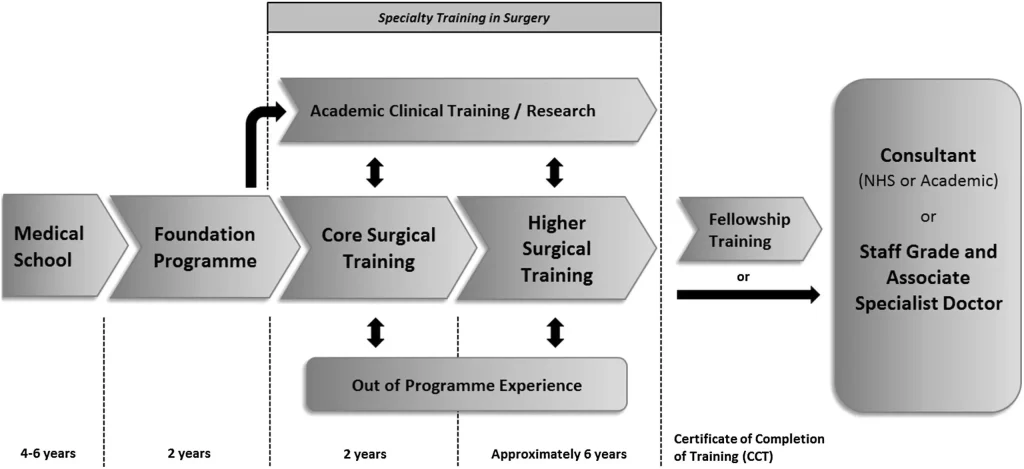
General Surgery Training Pathway in the UK (CST, ST3, CCT & CESR Explained)

General surgery training in the UK follows a structured, competency-based framework regulated by the General Medical Council (GMC). Indian doctors and international medical graduates can enter this pathway at different stages depending on their prior surgical experience, qualifications, and eligibility. The three main routes include the CCT pathway, the CESR-Combined Programme (CESR-CP), and the CESR route.

Core Surgical Training (CST): Your Foundation in General Surgery in the UK

Before entering specialty training in general surgery, all candidates—whether UK graduates or international medical graduates from India—must complete Core Surgical Training (CST). This two-year programme is the critical foundation upon which your entire surgical career in the United Kingdom rests. During CST, Indian doctors gain exposure across multiple surgical specialties: general surgery, trauma and orthopaedics, urology, otolaryngology (ENT), and often vascular or paediatric surgery.

What makes core surgical training important for Indian doctors is that it allows you to test whether general surgery is genuinely your chosen specialty. Many doctors discover during this period that another surgical field—such as orthopaedic surgery or urology—aligns better with their interests and strengths. The CST curriculum emphasizes not just operative skills but also:

  • Perioperative patient management and critical care understanding
  • Communication and teamwork in high-pressure surgical environments
  • Understanding of NHS governance, safety standards, and professional accountability
  • Preparation for the MRCS examination, a mandatory milestone before progression

For Indian-trained doctors entering CST after PLAB registration, the transition often feels demanding. You’re learning not just surgical technique but also the rhythms, expectations, and standards of the NHS—a healthcare system fundamentally different from India’s. However, trainers understand this adjustment period, and most successful Indian surgical trainees report that by the end of CST, they feel genuinely confident in their clinical skills and their ability to progress to higher specialist training.

1. CCT Route (Certificate of Completion of Training)

The CCT route is the standard and most structured pathway for doctors entering UK general surgery training, particularly suitable for recent graduates or those with limited prior surgical experience.

This pathway typically includes:

  • Two years of Core Surgical Training (CST), during which trainees rotate across surgical specialties and prepare for the MRCS examination
  • Approximately six years of higher specialty training in general surgery (ST3 to ST8), focusing on advanced operative skills and subspecialty exposure
  • Successful completion of MRCS during CST and FRCS examinations during higher training

On completion, doctors are awarded a Certificate of Completion of Training (CCT), enabling entry onto the UK Specialist Register as a consultant general surgeon. UK CCT is internationally respected and may support career progression in India, subject to prevailing regulations set by the National Medical Commission.

2. CESR-CP Route (Combined Programme)

The CESR–Combined Programme (CESR-CP) is designed for doctors who already have more than 18 months of surgical experience and whose prior training is assessed as broadly equivalent to early UK specialty training.

Eligible candidates may enter UK general surgery training at the ST3 level, allowing them to complete the remaining portion of structured training within the NHS, typically over six years. Depending on individual progress and assessment outcomes, completion may lead to the award of a CCT or CESR, both of which allow application to the UK Specialist Register.

3. CESR Route (Certificate of Eligibility for Specialist Registration)

The CESR route is intended for experienced surgeons who have completed most or all of their surgical training outside the UK, such as those holding MS or MCh qualifications. Rather than entering formal UK training, applicants demonstrate equivalence to UK CCT standards through a detailed portfolio submission to the GMC.

Evidence must cover all domains of UK general surgery training, including operative experience, clinical decision-making, teaching, audits, research, leadership, and professional development. While the CESR pathway is rigorous and documentation-intensive, successful applicants gain entry onto the UK Specialist Register without completing the full UK training programme.

This route is particularly suitable for senior Indian surgeons seeking consultant-level recognition in the UK, provided they meet strict equivalence criteria.

It is important to understand that none of these pathways are shortcuts. Eligibility, duration, and outcomes vary based on individual experience, documentation, and regulatory assessment. Early planning and accurate guidance are essential when choosing the most appropriate general surgery training route in the UK.

The CESR Route: General Surgery in the UK for Experienced Indian Surgeons

The Certificate of Eligibility for Specialist Registration (CESR) pathway represents an important, though underutilized, option for Indian surgeons with postgraduate qualifications. If you hold an MS (Master of Surgery) or MCh in general surgery from India, you may be eligible to apply for CESR without completing the full UK training programme.

CESR is not a shortcut. Instead, it’s an equivalence-based assessment. You compile a detailed portfolio demonstrating that your training and experience meet UK standards across all domains of general surgery: operative experience (with case numbers and complexity), emergency surgical management, clinical decision-making, teaching and mentorship provided, audit and quality improvement involvement, research and publications, and professional development.

The GMC reviews this portfolio—usually 100+ pages of documentation—against UK CCT standards. If the assessment committee concludes that your training is equivalent to a UK CCT, they award CESR, allowing you to apply for consultant positions in the NHS. The process typically takes 4-6 months and requires substantial documentation effort. However, for an established surgeon in India with strong operative credentials and a publication record, CESR can be a pathway to UK practice without repeating the full 8-year training timeline.

Important caveat: CESR is highly competitive. Strong academic credentials, published work, and evidence of senior-level surgical responsibility in India significantly strengthen applications. The pathway works best for surgeons aged 35-45 with 8-10 years of post-qualification experience. Younger surgeons or those without substantial operative experience are more successfully served by the CESR-CP route (entering specialty training at ST3) or the standard CCT pathway.

Comparison of Training Routes

RouteEntry PointDurationFinal Qualification
CCTCST (CT1)8 yearsCCT (Consultant)
CESR-CPST36 yearsCCT or CESR
CESRConsultantVariesCESR (Consultant)

The most suitable training route depends on a doctor’s prior surgical experience, qualifications, and long-term career goals. While the CCT pathway is ideal for early-career doctors, CESR-CP and CESR routes are designed for surgeons with substantial prior training or experience outside the UK. All routes require careful documentation, regulatory assessment, and fulfilment of UK competency standards.

Subspecialties and Advanced Training After General Surgery in the UK

After completing general surgery training in the UK, doctors can pursue further subspecialisation within the field through recognised higher specialty interests and fellowships. Common subspecialty areas within general surgery include colorectal surgery, upper gastrointestinal surgery, hepatopancreatobiliary (HPB) surgery, breast surgery, endocrine surgery, and vascular surgery (now a separate specialty in some pathways).

Advanced subspecialty training is typically undertaken during higher specialty training or through post-CCT fellowships. These programmes offer focused exposure to complex surgical procedures, multidisciplinary care, and research opportunities, helping surgeons develop niche expertise aligned with consultant-level practice in the NHS or internationally. For those interested in orthopaedic pathways specifically, see our page on orthopaedic surgery in the UK and MCh Orthopedic Surgery at the University of Dundee.

It is important to note that specialties such as orthopaedic surgery, plastic surgery, paediatric surgery, and cardiothoracic surgery follow separate and independent training pathways in the UK and are not pursued after completing general surgery training.

Surgical Fellowship and Career Advancement: Specialising in General Surgery in the UK

After completing your general surgery training and receiving your CCT (or CESR), the UK surgical career structure opens several pathways. Many surgeons spend 1-2 years in fellowship positions—focused, intensive training in a surgical subspecialty of their choice. Common fellowship destinations for Indian surgeons include:

Upper Gastrointestinal (UGI) Surgery: Specialising in oesophageal, gastric, and hepatic procedures. These fellowships often involve research opportunities and international collaboration, particularly valuable if you’re planning to return to India.

Colorectal Surgery: The largest surgical subspecialty cohort in the UK. Colorectal fellowships emphasize both open and minimally invasive approaches, with strong emphasis on outcomes research and quality improvement.

Hepatopancreatobiliary (HPB) Surgery: Complex surgery of the liver, pancreas, and bile ducts. HPB training is intensive and typically attracts surgeons with strong academic interests.

Breast Surgery: Increasingly popular among both male and female surgeons. Breast surgery combines operative skills with significant clinic-based work and emotional intelligence in patient management.

Endocrine Surgery: Specialisation in thyroid, parathyroid, and adrenal surgery. Often smaller teams, offering close mentorship and research opportunities.

For Indian doctors considering surgical fellowship in the UK, the practical advantage is clear: you gain subspecialty expertise while remaining within the NHS, building an international reputation, and creating publication records that enhance your global profile. Many Indian surgeons return to India after 1-2 years of fellowship training with credentials that position them for senior roles in premier Indian institutions.

Step-by-Step Guide for Indian Doctors to Pursue General Surgery in the UK

General Surgery in the United Kingdom

If you are seriously considering general surgery in the UK after MBBS in India, it is important to understand the complete education and training pathway—from entry requirements to consultant-level practice. The UK surgical training system is structured, transparent, and internationally respected.

For Indian doctors, long-term recognition depends on the nature of training completed, the awarding institution, and compliance with prevailing regulations of the National Medical Commission (NMC). This step-by-step guide explains the realistic pathway, key exams, alternative routes, and decision points involved in pursuing general surgery in the UK.

The general surgery pathway in the UK typically involves the following stages:

  • Complete an NMC-recognised MBBS degree
  • Demonstrate English proficiency (IELTS or OET)
  • Obtain GMC registration through UKMLA or approved alternative routes
  • Gain UK clinical experience (Foundation equivalent or non-training NHS roles)
  • Enter Core Surgical Training (CST)
  • Clear the MRCS examination
  • Progress to Specialty Training in General Surgery (ST3–ST8)
  • Clear the FRCS examination
  • Achieve Certificate of Completion of Training (CCT) or CESR
  • Work as a consultant general surgeon in the UK or internationally

Experienced doctors with prior postgraduate surgical training may enter through CESR-CP or CESR routes depending on eligibility.

🎓 Step 1: Undergraduate Medical Degree (MBBS)

For Indian doctors, the journey begins with completing an MBBS degree from an institution recognised by the NMC. This provides the foundational medical knowledge and clinical exposure required for international licensing and further surgical training.

🏥 Step 2: UK Foundation Programme or Equivalent Clinical Experience

For Indian doctors, the practical reality is this: you’ve already completed 5-6 years of MBBS training and your internship (equivalent to FY1). Repeating a formal two-year Foundation Programme would be redundant. Instead, after passing PLAB and obtaining GMC registration, you enter the NHS through one of several routes:

Non-Training Service Posts (most common): These are fixed-term clinical roles—typically 6-12 months—where you work as a doctor in NHS hospitals without being in a formal training programme. You’re not getting the “training outcome” benefits of structured training, but you are gaining NHS experience and building UK-based references. Many Indian doctors work 1-2 such posts before applying for CST.

Locum Appointment for Training (LAT) or Clinical Fellowship roles: Some hospitals offer clinical fellowships specifically designed for international medical graduates. These roles involve clinical work alongside some training structure and mentorship. They’re particularly valuable if you want to build confidence and demonstrable UK experience before entering competitive CST recruitment.

Direct CST Application: Some hospitals accept doctors directly into CST without requiring prior non-training experience, though this is increasingly uncommon. Your PLAB pass plus any demonstrated surgical experience strengthens CST applications.

🔧 Step 3: Core Surgical Training (CST – CT1/CT2)

Core Surgical Training (CST) is a two-year programme designed to develop essential surgical competencies, including patient assessment, peri-operative care, and operative assistance. Trainees rotate through multiple surgical specialties to build a strong foundation.

During CST, candidates prepare for and pass the MRCS examination, which is mandatory for progression to higher surgical training.

🔬 Step 4: Specialty Training in General Surgery (ST3–ST8)

After clearing MRCS, doctors enter higher specialty training in general surgery at the ST3 level. This phase typically lasts six years and focuses on advanced operative skills, emergency surgery, subspecialty exposure, research, teaching, and leadership development.

During this period, trainees work towards the FRCS examination and must demonstrate competence across all domains of UK general surgery training. Successful completion leads to the award of CCT, enabling entry onto the UK Specialist Register as a consultant general surgeon.

🧾 Step 5: Alternative Routes for Experienced Surgeons (CESR / CESR-CP)

Doctors with significant postgraduate surgical training or experience outside the UK may pursue CESR or CESR–Combined Programme (CESR-CP) routes. These pathways assess equivalence to UK training standards through detailed portfolio evidence and regulatory review.

📘 Summary: The Educational Journey at a Glance

StageDurationFocus
MBBS / UG Medical Degree5–6 YearsBasic medical education
Foundation Programme (FY1–FY2)2 YearsBroad clinical training
Core Surgical Training (CST)2 YearsBasic surgical skills, MRCS prep
Specialty Training (ST3–ST8)6 YearsAdvanced surgery, FRCS, CCT

🧩 A Structured and Internationally Respected Pathway in General Surgery

The journey from MBBS in India to specialist-level training in General Surgery in the UK is designed to offer structured professional growth, high clinical standards, and global exposure. UK surgical training follows a clearly defined pathway regulated by the General Medical Council (GMC) and delivered through approved NHS institutions.

For Indian doctors, long-term recognition in India depends on multiple factors, including the nature of training completed, the awarding institution, and compliance with prevailing guidelines issued by the National Medical Commission. While qualifications such as MRCS, FRCS, CCT, or CESR are internationally respected, doctors planning to return to India should always verify the latest NMC regulations before making career decisions.

Whether your goal is to continue working in the NHS or explore opportunities back in India, UK surgical training can be professionally transformative—provided it is planned with regulatory clarity and long-term objectives in mind.

General Surgery in the United Kingdom – Eligibility Requirements for International Medical Graduates

For Indian doctors and other international medical graduates (IMGs), pursuing General Surgery in the UK requires meeting defined academic, language, and licensing criteria. Understanding these requirements early helps streamline the application process and avoid unnecessary delays.

Basic Eligibility Criteria for General Surgery in the UK

To apply for UK surgical training or clinical roles, international doctors typically need:

  • Recognised Primary Medical Qualification
    An MBBS or equivalent medical degree acceptable to the General Medical Council.
  • Credential Verification
    Verification of medical qualifications through ECFMG or other approved verification systems (as applicable).
  • English Language Proficiency
    IELTS (usually overall 7.5 with minimum component scores) or OET (Grade B in all sections), as required for GMC registration and NHS employment.

PLAB, SPONSORSHIP & MSRA

For Indian doctors entering UK surgical training, understanding PLAB, UKMLA, GMC sponsorship, and MSRA is essential — because each serves a different purpose in your journey.

Important update for 2024 onwards: PLAB 2 has been replaced by CPSA (Clinical and Professional Skills Assessment). The full UK licensing assessment is now called UKMLA (UK Medical Licensing Assessment), consisting of two parts: AKT (Applied Knowledge Test, replacing PLAB 1) and CPSA (replacing PLAB 2). Throughout this guide, references to “PLAB” include the UKMLA pathway, which is functionally the same process with updated exam names. Indian MBBS doctors planning to take the licensing route from 2024 onwards should prepare for UKMLA, not the older PLAB format.

The PLAB/UKMLA examination remains the most straightforward entry point for Indian MBBS graduates. It consists of two parts: AKT (written exam, formerly PLAB 1) and CPSA (an OSCE-style practical assessment conducted in the UK, typically in Manchester, formerly PLAB 2). Most candidates spend 4-8 months preparing after their MBBS internship. The pass rate for Indian candidates was approximately 62% for AKT and 60% for CPSA in 2025, with significant variation based on preparation quality. Critically, passing UKMLA grants you GMC registration — the legal credential required to work in any NHS role. Without GMC registration, you cannot legally practice as a doctor in the UK, regardless of your qualifications.

GMC Sponsorship is sometimes mentioned as an alternative to PLAB, but it’s important to understand what this actually means. GMC sponsorship refers to specific pathways where an NHS organisation (hospital trust) or university can sponsor a doctor’s registration without requiring PLAB. These routes are rare and highly selective. Eligibility typically requires either: (a) holding a recognised postgraduate qualification such as MRCP or MRCS, (b) being appointed to a specific clinical fellowship position through a GMC-approved sponsor, or (c) meeting very specific criteria related to prior training equivalence. For most Indian doctors arriving in the UK fresh after MBBS, GMC sponsorship is not practically available — PLAB/UKMLA is the genuine pathway. One important point: the GMC Sponsorship route is not open to doctors who have previously attempted and failed the PLAB exam.

MSRA (Multi-Specialty Recruitment Assessment) is fundamentally different from both PLAB and postgraduate exams. It’s not a licensing or competency exam — it’s a recruitment selection tool. MSRA is used when applying for entry-level specialty training posts, including Core Surgical Training (CST). You must already hold GMC registration (through PLAB/UKMLA or other means) before taking MSRA. The exam assesses your clinical reasoning, professional behaviour, and situational judgement across multiple specialties. Think of MSRA as your means of competing for a specific CST post in a specific hospital trust. Without good MSRA performance, you can’t secure a CST position, even if you’ve passed PLAB.

The practical sequence for Indian doctors is therefore: UKMLA (AKT + CPSA) → GMC Registration → MSRA (if applying for training posts) → CST post offer.

UK Medical Training Prioritisation Act 2026 — What It Means for Indian Doctors Pursuing Surgery

The Medical Training (Prioritisation) Act 2026 became law on 5 March 2026 in the United Kingdom. This is a significant change that every Indian doctor planning to pursue general surgery in the UK must understand.

What the Act does: it gives UK-trained medical graduates first priority for foundation training and specialty training posts, including Core Surgical Training (CST) and higher specialty training (ST3 onwards). Indian doctors and other international medical graduates now compete in a separate pool — you will only be offered a training post if there are unfilled positions after all prioritised candidates have been placed. In 2025, approximately 15,700 UK-trained doctors and 25,300 overseas-trained doctors competed for around 12,800 specialty training posts (source: UK Government Impact Statement). In 2026, total applicants exceeded 47,000.

What has NOT changed: your ability to get GMC registration through UKMLA is completely unaffected. You can still work in the NHS in non-training service posts, clinical fellowships, and locum roles. The Act only affects formal training post allocation — not your right to work as a doctor in the UK.

What this means practically: competition for CST posts has become tougher for Indian doctors starting from the 2026 recruitment cycle. However, non-training NHS posts remain fully accessible, and many Indian doctors use these roles to build experience and a strong portfolio before applying for training posts in subsequent cycles. Doctors with “significant NHS experience” — expected to be defined as approximately 5 years in future regulations — may also receive priority in upcoming recruitment rounds.

For Indian doctors who already hold Indefinite Leave to Remain (ILR) in the UK, or who are Commonwealth citizens with right of abode, the prioritisation does apply in your favour — you fall within the priority group regardless of where your MBBS was completed.

If you want to understand how this affects your specific situation, speak with Career Voyage. Our team stays current with UK regulatory changes and can advise you on the best pathway given the new prioritisation rules. Call or WhatsApp us for a free consultation.

🔥 General Surgery in the UK Without PLAB – What Indian Doctors Must Know

Many Indian doctors search for general surgery in the UK without PLAB, hoping to bypass the traditional licensing exam. While PLAB (now UKMLA) is the most common route to GMC registration, it is not the only possible pathway in specific circumstances. However, it is crucial to understand what is realistically achievable and what is often misunderstood.

PLAB is a licensing exam, not a surgical training exam. Whether it can be avoided depends entirely on a doctor’s qualifications, prior surgical experience, and eligibility under current regulations of the General Medical Council.


✅ When Is General Surgery in the UK Possible Without PLAB?

In limited and well-defined situations, Indian doctors may obtain GMC registration and work in UK surgical roles without PLAB, through alternative, GMC-approved routes:

  • GMC Sponsorship Schemes
    Doctors appointed to specific NHS roles under recognised sponsorship programmes may receive GMC registration without PLAB. These posts are usually fixed-term and highly competitive.
  • Senior or Experienced Surgeons (CESR / CESR-CP Routes)
    Doctors with substantial postgraduate surgical training (such as MS or MCh) and documented experience may pursue equivalence-based pathways, where competency—not exams—is assessed.
  • Approved Institutional or Fellowship-Based Appointments
    In selected cases, overseas surgeons may be appointed to UK clinical roles through institutional pathways that support GMC registration without PLAB. The University of Chester and the University of Dundee, for example, offer clinical programmes where GMC registration can be supported through a sponsorship framework for eligible candidates.

⚠️ These routes are profile-dependent, assessed case by case, and are not shortcuts.

🎯 Strategic Advice for Indian Doctors

Rather than focusing only on avoiding PLAB, Indian doctors are advised to:

  • Choose pathways that support long-term surgical careers
  • Combine NHS clinical experience with MRCS preparation
  • Build structured portfolios aligned with UK surgical standards
  • Seek clarity before committing to non-standard routes

In many cases, PLAB + NHS experience + MRCS leads to faster and more stable progression than attempting uncertain alternatives.


🔑 Key Takeaway

General Surgery in the UK without PLAB is possible — but only for a narrow group of experienced doctors. For most Indian MBBS graduates, PLAB (now UKMLA) remains the safest and most transparent entry point into UK surgical careers.

Building Your Surgical Portfolio: Essential Steps for General Surgery in UK Success

Whether you’re pursuing general surgery training in the UK through the standard PLAB + CST pathway or through alternative routes, one reality is universal: your paper credentials matter, but your demonstrated surgical experience matters more. The GMC and NHS training programmes assess candidates not just on exam results but on the breadth, depth, and quality of their clinical experience.

For Indian doctors planning to move to the UK for surgical training, early portfolio building is essential. This means documenting your surgical cases, your operative involvement level, your management of post-operative complications, and your engagement with audit, quality improvement, and research. The NHS expects surgical trainees to contribute to departmental governance and to show evidence of reflective practice—learning from cases that didn’t go smoothly, implementing improvements, and demonstrating professional growth.

Practically speaking, this translates to:

Before applying for training posts: Compile a detailed list of surgical procedures you’ve assisted in and performed independently. Obtain supervisor references that speak to your operative competency, clinical judgment, and professionalism. If possible, engage in at least one audit or quality improvement project that you can describe in interviews.

During CST: Maintain a portfolio documenting your progression. The UK system uses workplace-based assessments (WBAs) to track your development. These aren’t intimidating tests but ongoing feedback from consultants observing you in real clinical situations. Keep examples of good feedback, and address constructively any areas flagged for improvement.

For specialist training entry: Surgical training posts are competitive. Candidates with research experience, presentations at medical conferences, or published work in peer-reviewed journals have a distinct advantage. If you’re planning to make the move, beginning research collaborations while still in India—or immediately upon arriving in the UK—strengthens your profile significantly.

General Surgery in the United Kingdom: Navigating the MRCS and FRCS Exams

Progression in UK general surgery is closely linked to two key professional examinations: MRCS and FRCS. These exams are not optional—they are integral milestones that determine entry into higher surgical training and eventual consultant-level practice within the NHS.

Structure of the MRCS Examination

MRCS Part A – Written Examination

This part assesses core scientific knowledge essential for surgical practice and is divided into two papers:

  • Paper 1: Applied basic sciences, including anatomy, physiology, pathology, and applied surgical science
  • Paper 2: Principles of surgery in general, covering perioperative care, trauma, critical care, and surgical decision-making

Part A tests not just factual recall but the ability to apply scientific principles to real clinical scenarios.


MRCS Part B – Practical (OSCE) Examination

MRCS Part B is an Objective Structured Clinical Examination (OSCE) designed to assess real-world surgical competence.

The stations broadly evaluate:

  • Applied Knowledge
    Anatomy, surgical pathology, applied surgical science, and critical care
  • Applied Skills
    Communication skills, history taking, clinical examination, procedural skills, and professional judgement

This exam focuses heavily on how candidates think, communicate, and perform in clinical situations—mirroring everyday NHS practice.

Doctors applying for ST3-level training or surgical fellowship posts in the UK are required to have successfully cleared both MRCS Part A and Part B. For a detailed comparison of PLAB versus MRCS, see our page on PLAB or MRCS: which is better.


FRCS Exam – Achieving Consultant-Level Competence

The Fellowship of the Royal College of Surgeons (FRCS) examination is undertaken during the later stages of higher specialty training in general surgery. It represents the final academic and professional assessment before being awarded the Certificate of Completion of Training (CCT).

Structure of the FRCS Examination

  • Section 1 (Written Component):
    Tests advanced theoretical knowledge in general surgery and related subspecialty areas.
  • Section 2 (Oral / Practical Component):
    Assesses operative judgement, decision-making, management of complex surgical cases, and professional reasoning at consultant level.

Passing FRCS demonstrates that a surgeon is competent to practice independently and safely as a consultant within the NHS.


Why MRCS and FRCS Matter for Indian Doctors

For Indian doctors pursuing general surgery in the UK after MBBS, MRCS and FRCS serve multiple purposes:

  • Mandatory progression points within UK surgical training
  • Strong indicators of structured, internationally benchmarked surgical competence
  • Essential credentials for consultant-level practice in the UK
  • Important components when planning long-term career recognition, subject to regulations of the National Medical Commission

For Indian doctors, the MRCS exam represents a critical inflection point in your UK surgical journey. Unlike PLAB, which is a licensing exam that grants you permission to work as a doctor in the NHS, MRCS is a competency exam that declares you’re ready for higher surgical training. Passing both parts of MRCS (Part A written examination and Part B OSCE) is non-negotiable for progression to ST3-level general surgery training. For this reason, preparation for MRCS exams for Indian doctors often runs parallel to your CST rotations—you’re working full clinical hours while preparing for a rigorous, knowledge-intensive exam.

The FRCS exam, pursued later during specialty training, functions differently. By the time you approach FRCS, you’ve spent years in operative surgical practice. FRCS assesses whether you’re ready to manage complex surgical cases independently, make independent clinical decisions, and train future surgeons. Many trainees report that FRCS feels less like an exam in the traditional sense and more like a formal verification of competency you’ve already developed through years of practice.


Key Takeaway

MRCS opens the door to higher surgical training.
FRCS confirms readiness for consultant-level practice.

Both exams are demanding, but they ensure that UK-trained surgeons meet consistently high clinical and professional standards.

🔹 Career Opportunities After General Surgery Training in the UK

Completing general surgery training in the United Kingdom opens up diverse and well-defined career opportunities within the NHS and internationally. UK-trained surgeons are highly regarded for their structured training, clinical governance exposure, and adherence to evidence-based surgical practice.

Within the National Health Service, early-career surgeons typically work in roles such as Specialty Doctor, Associate Specialist, or Senior Clinical Fellow, while those who complete CCT or CESR are eligible for consultant posts. Consultant general surgeons in the UK start at approximately £109,000 per year (approximately Rs 93 lakh), with remuneration increasing based on experience, seniority, and additional responsibilities. Junior surgeons in CST earn approximately £32,000-43,000 per year (approximately Rs 27-36 lakh). Specialty registrars earn £49,000-61,000 per year (approximately Rs 41-52 lakh). These are basic salaries — on-call and weekend supplements can add 20-40% more.

For Indian doctors, UK surgical training can significantly enhance career prospects. Many choose to continue working within the NHS, while others return to India or move to other healthcare systems, where UK training is widely respected. Long-term recognition and eligibility for practice in India remain subject to prevailing regulations of the National Medical Commission.

🔹 Other Countries Offering Recognised Surgery Training Abroad

In addition to the UK, several countries offer internationally recognised surgical training pathways. Popular destinations include the United States, Australia, New Zealand, and Canada, each with its own licensing exams, residency or training structures, and regulatory requirements.

Indian doctors considering surgical training in these countries must carefully evaluate eligibility criteria, duration of training, licensing examinations, and long-term career outcomes. It is equally important to verify whether the completed training aligns with future professional goals and recognition requirements in India, as determined by the National Medical Commission or other relevant authorities.

Compared to many destinations, the UK remains a preferred choice due to its transparent training structure, globally recognised qualifications, and flexible career pathways for international medical graduates.

🔹 Visa and Financial Planning for Surgical Training Abroad

Pursuing general surgery training abroad requires careful visa and financial planning. Costs can vary significantly depending on the country, city, and stage of training, with higher living expenses in major centres such as London.

Total exam costs including UKMLA (AKT and CPSA), MRCS Part A and Part B, and GMC registration come to approximately Rs 3.5-4.5 lakh. Initial relocation costs including visa, flights, and first month accommodation are approximately Rs 1.5-3 lakh. Once you secure an NHS post, salaries start at approximately Rs 27 lakh per year for CST posts and increase with seniority. Most Indian doctors become financially self-sufficient within the first year of NHS employment. Career Voyage can help you plan the financial side of your UK surgery journey — call us for a detailed breakdown based on your specific situation.

Visa applications typically require proof of academic qualifications, English language proficiency, financial stability, and, in some cases, confirmed employment or training offers. In the UK, doctors must also account for costs related to examinations, professional registrations, and relocation. NHS doctors apply for the Health and Care Worker Visa — a significantly discounted Skilled Worker Visa — and are exempt from the Immigration Health Surcharge, saving approximately £1,035 per year compared to standard visa holders.

Early financial planning, realistic budgeting, and a clear understanding of visa requirements can help minimise stress and allow doctors to focus on clinical training and career progression.


Testimonials

Dr. Sharma’s Journey: From Rural India to a Leading NHS Consultant
“The structured training and consultant-led mentorship I received in the UK were invaluable to my development as a surgeon. The emphasis on clinical governance and hands-on responsibility helped me gain confidence in managing complex surgical cases. Clearing the MRCS and FRCS examinations played a key role in opening up long-term career opportunities. Today, I work in a senior surgical role within the NHS, with a focus on minimally invasive procedures.”

Dr. Priya Reddy, General Surgeon
“Pursuing surgical training in the UK was a defining step in my career. The exposure to diverse cases, structured supervision, and clear training framework helped me grow both professionally and personally. The experience I gained has prepared me to work confidently across different healthcare systems.”


General Surgery in the UK: Cost of Living and Visa Process for Indian Doctors

Relocating to the UK for general surgery training or NHS employment requires careful financial and visa planning. The cost of living varies significantly by location, with cities such as London being considerably more expensive than other regions in the UK. Indian doctors are advised to research accommodation options early and plan budgets that account for rent, utilities, transport, examination fees, and daily living expenses.

In addition to financial planning, doctors must navigate the UK visa process, which involves submitting detailed documentation. This typically includes proof of academic qualifications, English language proficiency, financial stability, and a valid job offer or training placement. Visa requirements and eligibility criteria are governed by UK immigration authorities and may change periodically.

To avoid errors or delays, applicants should always rely on official guidance published by the UK Home Office and seek advice from authorised immigration advisors when necessary. Early preparation helps ensure a smoother transition and allows doctors to focus on their clinical training and career progression in the UK.

UK Student Visa Process, Cost and Requirement

General Surgery in the UK: Frequently Asked Questions

General Surgery in the UK: Frequently Asked Questions by Indian Doctors

Can I pursue general surgery in the UK without PLAB after MBBS in India?

Yes, in limited circumstances. If you hold a recognised postgraduate qualification like MRCS, or if you are appointed to a clinical fellowship through a GMC-approved sponsor, you may get GMC registration without PLAB. Senior surgeons with MS or MCh from India can apply through the CESR route. However, for most Indian MBBS graduates, PLAB — now called UKMLA — remains the standard entry pathway. For a detailed eligibility check, get in touch with Career Voyage.

Is UK general surgery training recognised by NMC India?

Yes. The UK is among five English-speaking countries whose PG degrees are recognised by the National Medical Commission (NMC India). If you complete general surgery training in the UK and hold CCT or CESR, you can register with NMC India as a specialist surgeon. You do not need to clear the FMGE exam — or its replacement, the NExT exam — to practice in India. This is one of the biggest practical advantages of UK surgical training for Indian doctors.

I’ve completed MBBS in India and want to pursue general surgery in the UK. What’s the quickest route?

There’s no single “quick” route, but the most direct is: UKMLA — AKT written exam followed by CPSA practical exam, 4-8 months preparation — then GMC Registration, MSRA exam, and CST post, typically starting the following September or January. Total time from UKMLA pass to starting CST: 3-12 months depending on recruitment cycles. The entire journey from MBBS to consultant via CCT takes approximately 8-10 years post-MBBS. While this sounds long, it’s comparable to an MS degree in India, with the added advantage of international credentials and higher earning potential throughout the process.

What is the difference between PLAB and UKMLA for Indian doctors?

UKMLA (UK Medical Licensing Assessment) has replaced PLAB from 2024 onwards. It has two parts: AKT (Applied Knowledge Test, replacing PLAB 1) and CPSA (Clinical and Professional Skills Assessment, replacing PLAB 2). The format is similar but the exam content is now aligned with the GMC’s MLA Content Map. Indian doctors applying from 2024 onwards take UKMLA, not the older PLAB format. The practical CPSA exam is still conducted in Manchester, UK, just like the old PLAB 2 was.

How does the UK Medical Training Prioritisation Act 2026 affect Indian doctors wanting a CST post?

The Act, which became law on 5 March 2026, gives UK-trained graduates first priority for CST and specialty training posts. Indian doctors compete in a separate pool and are offered posts only if places remain after prioritised candidates are placed. However, GMC registration and non-training NHS work are completely unaffected. Many Indian doctors build 1-3 years of NHS experience in clinical fellowships and locum roles before applying for competitive training posts. Doctors with Indefinite Leave to Remain (ILR) in the UK fall within the priority group regardless of where their MBBS was completed.

Do I need to clear FMGE or NExT if I complete my surgical training from the UK?

No. If you complete your PG from the UK, you are exempt from both FMGE and its replacement NExT exam. Your UK qualification is directly recognised by NMC India. You can register with your State Medical Council and practice as a specialist surgeon in India without any additional screening test. This exemption applies because the UK is among the five English-speaking countries whose PG degrees NMC recognises directly — along with USA, Canada, Australia, and New Zealand.

Do I need to complete MRCS before applying for CST, or can I do it during CST?

You must pass MRCS Part A and Part B before progressing from CT2 to ST3 — so practically, you complete it during your CST years, not before starting CST. However, many candidates begin MRCS Part A study while preparing for PLAB, so they can attempt Part A shortly after starting CST. This means you’ll be working full-time in CST roles while preparing for MRCS. Most successful Indian surgical trainees find this manageable with disciplined study schedules, particularly if they use locum work flexibility to carve out exam preparation time.

I have MBBS plus 3 years of surgical experience in India but no MS degree. Can I skip CST and enter at ST3?

Possibly, via the CESR-CP route, but it requires formal assessment and documentation. You’d need evidence of procedures performed, supervisor evaluations, and proof of meeting competencies across all domains of general surgery. The standard pathway remains CST. Three years of experience in India may not be formally recognised as equivalent to UK CST without structured assessment, and the CESR-CP application process is rigorous. Discuss your specific profile with Career Voyage before committing to this route — success is not guaranteed and early guidance saves time.

How realistic is it to pass MRCS on the first attempt?

Approximately 40-50% of candidates pass Part A on first attempt, and 35-45% pass Part B on first attempt. Combined, probably 15-25% pass both parts within one year. This reflects the exam’s rigour — most successful candidates take 2-3 attempts total. Indians who passed PLAB typically find MRCS significantly harder because it requires deep surgical knowledge well beyond safe clinical practice. With structured preparation, focused study groups, and practical hands-on experience during CST rotations, your pass rate on subsequent attempts improves substantially.

Can I work as a locum surgeon in the UK while preparing for exams?

Yes, once you have GMC registration. Locum work is extremely common among Indian doctors preparing for MRCS. Most work locum shifts on weekends or on-call to fund exam preparation. Some take 6-12 month gaps to study full-time for MRCS Part B OSCE, which requires intensive hands-on practice. Many Indian trainees work 1-2 weekends per month as locums, earning £200-300 per shift, which comfortably covers exam fees and study materials. This financial flexibility is one of the genuine practical advantages of the UK system.

What are the costs involved in pursuing general surgery in the UK from India?

Total exam costs including UKMLA AKT, CPSA, MRCS Part A and Part B, and GMC registration come to approximately Rs 3.5-4.5 lakh. Initial relocation costs including visa, flights, and first month accommodation are approximately Rs 1.5-3 lakh. Once you secure an NHS post, salaries start at approximately Rs 27 lakh per year for CST posts and increase steadily with seniority. Most Indian doctors become financially self-sufficient within the first year of NHS employment. For a detailed cost plan based on your specific situation, contact Career Voyage.

Can I do general surgery in the UK if I failed NEET PG or FMGE?

Yes. UK surgical training does not require NEET PG or FMGE. You need GMC registration through UKMLA, English language proficiency through IELTS or OET, and a recognised MBBS degree. Many Indian doctors who could not secure a NEET PG seat, or who failed FMGE, have successfully pursued general surgery in the UK. If you complete your surgical training from the UK, you are also exempt from NExT — meaning you can return to India and practice as a specialist without any additional screening exam. Career Voyage has helped many doctors in this exact situation.

Final Verdict: Why General Surgery in the UK

Pursuing general surgery in the UK after MBBS in India is a realistic, achievable goal for Indian doctors committed to structured training and internationally recognised qualifications. The pathways exist. The recognition is real. The career outcomes—whether remaining in the UK, returning to India, or moving to other countries—are genuinely valuable. What separates successful candidates from those who struggle is not talent alone, but strategic planning, realistic timelines, and understanding exactly which pathway fits your qualifications and circumstances.

Choosing a pathway such as NMC recognised general surgery abroad or general surgery in the UK is a major professional decision that requires accurate information and reliable guidance. It is essential to rely on sources grounded in real-world experience and aligned with official regulatory frameworks.
This guide is informed by current standards and publicly available guidance from authoritative bodies such as the National Medical Commission, the General Medical Council, and the Royal College of Surgeons.

The pathways discussed in this article reflect recognised training structures, examination requirements, and professional benchmarks used internationally. By verifying programme accreditation, understanding regulatory expectations, and learning from professionals who have successfully navigated these routes, doctors can make informed decisions that support long-term career growth and professional credibility.

Real Timelines: What the General Surgery Journey Actually Looks Like

To provide concrete perspective, here’s what a typical timeline looks like for an Indian MBBS graduate pursuing general surgery training in the UK:

Month 0-4: Complete MBBS internship in India. Begin informal UKMLA preparation.

Month 4-8: Intensive UKMLA preparation. Consider online courses or coaching. Work locum shifts in India if possible to demonstrate clinical experience.

Month 8: Appear for AKT (formerly PLAB 1). Pass rate critical here — if unsuccessful, allow 2-3 months for revision and second attempt.

Month 10-12: Once AKT passed, prepare for CPSA (formerly PLAB 2). This involves practical skills training, communication practice, and ideally observing in NHS clinical settings if possible before formal exam.

Month 12: Appear for CPSA in the UK. This is your first trip to the UK for most candidates. Allow 2-4 weeks for exam attempt.

Month 13: Assuming CPSA passed, apply for GMC registration. This is typically processed within 2-4 weeks.

Month 14-18: Secure a non-training service post (locum, clinical fellowship, or fixed-term post) in an NHS hospital. Use this time to build UK experience, obtain references, and begin informal MRCS Part A study.

Month 18-22: Appear for MRCS Part A (written exam). This is more knowledge-intensive than PLAB. Allow 3-4 months of dedicated study.

Month 22-28: If Part A passed, begin MRCS Part B (OSCE) preparation. This requires hands-on practice in UK hospitals, so having a clinical post during this period is invaluable. OSCE exams are usually held 2-3 times per year; you may need to wait 3-6 months for your attempt.

Month 28-32: Appear for MRCS Part B. Many candidates need a second attempt. If successful, you now have MRCS — a critical credential for CST applications.

Month 32-36: Apply for CST posts. These are usually recruited in a centralised process in autumn/winter for posts starting the following September/January. Under the 2026 Prioritisation Act, you will compete in the IMG pool after UK graduates are placed. If unsuccessful, you have a further year in non-training roles to strengthen your application.

Month 36-48: Begin CST (assuming successful post-interview). Rotate through multiple surgical specialties while continuing MRCS Part B studies if not yet completed.

Year 5-8 (post-MBBS): Complete CST (2 years) and specialty training to ST8 (approximately 6 years), passing FRCS along the way. Total duration to consultant: 8-10 years post-MBBS.

Important perspective: This timeline stretches 8-10 years. It’s significant but comparable to the length of medical specialty training in India. The difference is that UK pathways are transparent, merit-based, and the qualifications are clearly valued internationally.

Ready to Take the Next Step?

Pursuing NMC recognised general surgery abroad can open doors to structured training, international exposure, and diverse career opportunities. Whether you are at the beginning of your journey or seeking to advance your surgical career, informed planning and expert insight can significantly improve outcomes.

To check your eligibility and understand which UK university and programme is right for you, contact Career Voyage. We have helped many Indian MBBS doctors and foreign medical graduates get admission to UK universities and understand the surgical training pathway. Call us or WhatsApp for a free consultation.